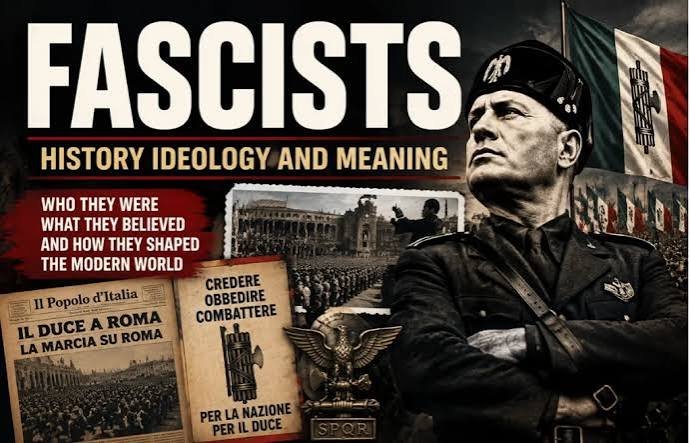
If you have recently seen the word fascisterne online or in a Danish article, you may be wondering what it means. At first glance, the word can look like the name of a political organization or a historical movement. However, its basic meaning is much simpler.
Fascisterne is a Danish word that means “the fascists” in English. It is the definite plural form of the Danish word fascist. The word refers to a particular group of people described as fascists rather than to fascism itself.
Understanding the word is useful because it can appear in Danish history, World War II discussions, political writing, news articles, books, and online conversations. However, the exact people meant by fascisterne depend on the context.
This article explains fascisterne meaning, its Danish grammar, the connection with fascism, its historical background, its relationship with Nazism, its use in Denmark, and how to understand the word when you see it in a Danish sentence.
What Does Fascisterne Mean?
The simplest translation of fascisterne is “the fascists.”
The word describes people associated with or identified as fascists. It does not itself mean “fascism,” and it is not automatically the name of one particular political party.
In Danish, the related words have different meanings:
- Fascist = a fascist
- Fascisten = the fascist
- Fascister = fascists
- Fascisterne = the fascists
- Fascisme = fascism
The difference is important because fascisme describes the ideology, while fascisterne refers to people. Danish uses noun endings to express forms that English often expresses with separate words such as “a,” “the,” or a plural ending.
So if you see fascisterne in a Danish text, the most direct English translation is the fascists.
Fascisterne Meaning in Simple Words
In very simple English, fascisterne means a specific group of people who are being described as fascists.
Imagine the difference between these English words:
- Fascist
- Fascists
- The fascists
Danish expresses these differences through grammatical forms. The ending -ne in fascisterne makes the plural definite.
This means that fascisterne does not necessarily tell you which fascists the writer is talking about. You need to read the surrounding sentence or paragraph.
For example, a historical text might use the word when discussing fascist supporters in Italy. Another text could use it when discussing Danish political movements. A modern political discussion could use the word as a label or accusation.
The surrounding context tells you what group is being discussed.
How Is the Word Fascisterne Formed?
The Danish grammar behind the word is fairly easy to understand.
The basic word is fascist.
When it becomes plural, it becomes fascister. When the plural is made definite, it becomes fascisterne.
The pattern looks like this:
| Danish word | English meaning |
|---|---|
| fascist | a fascist |
| fascisten | the fascist |
| fascister | fascists |
| fascisterne | the fascists |
This is why English speakers may find the word unusual at first. English normally uses a separate word, “the,” before the noun. Danish can place the definite marker at the end of the noun.
So fascisterne is not a completely separate word from fascist. It is a grammatical form of the same word.
Is Fascisterne the Name of a Political Party?
No. Fascisterne is not, by itself, the name of one specific political party.
This is an important point for people searching for the term online.
A Danish writer can use fascisterne when referring to fascists as a group. The particular group could be identified elsewhere in the sentence or article.
For example, the writer could be discussing:
- Italian Fascists
- Danish fascist groups
- Fascist movements in another European country
- Historical supporters of fascist governments
- A group described as fascist in a political debate
Therefore, translating fascisterne as the name of a specific organization without looking at the surrounding context can create confusion.
What Is Fascism?
To understand fascisterne, it helps to understand fascism.
Fascism is a political ideology and movement associated historically with authoritarian government, intense nationalism, rejection of liberal democratic politics, political repression, and the concentration of power under strong leadership.
The term became especially associated with Benito Mussolini and Fascist Italy after World War I.
Fascist movements developed in a number of European countries during the period between the First and Second World Wars. Their exact beliefs and practices were not identical everywhere, so historians generally examine individual movements in their own historical settings.
Some common characteristics associated with historical fascist movements included:
- Strong authoritarian leadership
- Extreme or intense nationalism
- Rejection of political pluralism
- Suppression of political opposition
- Propaganda
- Political violence
- Militarism
- Emphasis on national unity
- Restrictions on individual and political freedoms
Not every movement described as fascist had exactly the same program. This is one reason historical context matters when using the word.
Where Did the Word Fascism Come From?
The political term fascism is strongly connected to Italy and the movement led by Benito Mussolini.
The Italian word fascismo was derived from fascio, meaning a bundle or group. The term also connected with the Roman fasces, a bundle of rods that served as a symbol of authority in ancient Rome.
Mussolini’s Fascist movement became one of the most important examples of fascism in the twentieth century. Fascists used ideas about national unity, authority, discipline, and centralized political power to challenge existing democratic and political systems.
The movement later became a major part of European political history and influenced political movements in other countries.
This historical background is why a simple Danish word such as fascisterne can carry much more meaning than its literal translation might suggest.
Fascisterne and Benito Mussolini
When studying the history behind fascisterne, Benito Mussolini is an important figure.
Mussolini founded the Italian Fascist movement and became Prime Minister of Italy in 1922. His government gradually moved toward dictatorship, with political opposition increasingly restricted and state propaganda playing an important role.
Mussolini’s Fascist Italy became a major example of authoritarian fascist rule in Europe.
The Italian experience also influenced political movements outside Italy. However, not every authoritarian movement in Europe was identical to Mussolini’s movement.
This distinction is important when studying historical terminology. The word fascisterne can describe fascists generally, but the exact organization or movement should be identified from the historical context.
Fascisterne and World War II
The word is also likely to appear in discussions about World War II.
Fascist movements were an important part of European political developments before and during the war. Italy under Mussolini was one of the major Axis powers, while Nazi Germany developed its own form of authoritarian politics based on National Socialism.
The period included dictatorship, political persecution, mass violence, military expansion, and the Holocaust.
Because of this history, terms related to fascism are frequently found in books and educational material about the 1930s and 1940s.
When a Danish historian uses fascisterne, the word may therefore appear in a discussion of political movements, wartime events, collaboration, resistance, or the development of authoritarian politics.
Are Fascists and Nazis the Same?
The words fascist and Nazi are related historically, but they are not simply interchangeable.
Fascism is a broader political category with different movements appearing in different countries.
Nazism refers specifically to the ideology and movement associated with Adolf Hitler and the National Socialist German Workers’ Party, commonly known as the Nazi Party.
Nazi ideology included extreme racial hierarchy, antisemitism, territorial expansion, dictatorship, and other beliefs that were central to the Nazi system.
Nazism is therefore generally discussed as a particular form of far-right authoritarian politics with its own ideology and historical development.
A historical source may discuss fascists and Nazis together because of their alliances and shared opposition to liberal democracy and communism, but that does not mean the two terms have exactly the same meaning.
Fascisterne in Danish History
The word fascisterne can also appear in discussions of Denmark’s political history.
Denmark had its own fascist and National Socialist movements during the period surrounding World War II. One important organization was the Danish National Socialist Workers’ Party, commonly known as DNSAP, which was founded in 1930.
Denmark was occupied by Nazi Germany from 1940 to 1945.
During this period, Danish politics included supporters of collaboration with Germany as well as resistance movements and other political groups.
This historical setting can affect the meaning of fascisterne in a Danish text. A writer discussing Danish history may be referring to Danish fascists, National Socialists, collaborators, or another specifically identified group.
These categories should not automatically be treated as identical. The exact meaning depends on the source and the group being discussed.
Why Context Matters When Reading Fascisterne
One of the most important things to remember is that translation alone does not tell you everything.
If you translate fascisterne as “the fascists,” you have translated the word correctly. But you may still not know exactly who the writer means.
For example, imagine a Danish article contains the word fascisterne.
Before deciding what it means in that particular passage, ask:
- Who is the article discussing?
- Is the article about Italy?
- Is it about Denmark?
- Is it about World War II?
- Is it describing a historical organization?
- Is the writer quoting another person?
- Is the word being used in a modern political argument?
The answers can change the interpretation.
This is especially important when translating historical documents because adding information that is not present in the original text can create an inaccurate translation.
Fascisterne in Modern Discussions
Although the historical meaning is important, fascisterne can also appear in modern political discussions.
People sometimes use terms such as “fascist” or “the fascists” when criticizing political opponents. In such situations, the word may be used as a political accusation rather than as a carefully established historical classification.
That means you should distinguish between:
Historical description:
A source identifies members of a documented fascist organization.
Political accusation:
A person describes another political group or individual as fascist.
These are not automatically equivalent.
When reading a modern statement, it is useful to look at who made the claim, what evidence they provide, and whether the term is being used historically, analytically, or rhetorically.
Is Fascisterne a Negative Word?
Yes, the word generally carries a strongly negative meaning because of the historical record associated with fascist movements.
The term is connected with authoritarian rule, political repression, violence, dictatorship, and, in particular historical cases, war and mass persecution.
However, the emotional meaning of the word should not replace the need for context.
If a history book says fascisterne, it may simply be identifying a historically documented group. If a person uses the word during an argument, it may function as an accusation.
Understanding this difference makes it easier to read political and historical material carefully.
Fascisterne vs Fascisme
One of the easiest mistakes is confusing fascisterne with fascisme.
They are related but mean different things.
Fascisterne means “the fascists.”
It refers to people.
Fascisme means “fascism.”
It refers to the ideology or political movement.
A simple way to remember the difference is:
Fascisme = the idea or ideology
Fascisterne = the people
This distinction is useful when translating Danish articles or searching for information about the subject.
Fascisterne vs Fascist
There is also a difference between fascist and fascisterne.
The English word “fascist” normally refers to one person or can sometimes be used adjectivally.
The Danish word fascisterne is plural and definite.
So:
Fascist → a fascist
Fascister → fascists
Fascisterne → the fascists
Once you understand this pattern, the word becomes much easier to recognize in Danish texts.
Why People Search for Fascisterne
People may search for fascisterne for several different reasons.
Some may have seen the word while translating a Danish article. Others may encounter it in a history lesson, documentary, book, newspaper article, or online discussion.
Common questions include:
- What does fascisterne mean?
- Is fascisterne Danish?
- What is fascisterne in English?
- Is fascisterne a political party?
- What is the difference between fascist and fascisterne?
- What does fascisterne mean in Danish history?
- Is fascisterne related to fascism?
- What is the difference between fascism and Nazism?
The answer to the first question is straightforward: fascisterne means “the fascists” in English.
The remaining questions require historical or grammatical context.
How to Translate Fascisterne Correctly
If you are translating a Danish sentence into English, the normal translation is “the fascists.”
However, avoid adding information that is not present in the original.
For example, if the Danish text only says fascisterne, translating it as “the Italian fascists” would add a country that may not be mentioned.
Likewise, translating it as “the Nazis” would be inappropriate unless the surrounding context clearly establishes that the term refers to Nazis.
A good translation preserves the meaning of the original while allowing the surrounding context to provide additional information.
Common Misunderstandings About Fascisterne
Fascisterne Is Not the Same as Fascism
This is the most common misunderstanding.
Fascisterne refers to people.
Fascisme refers to fascism.
Fascisterne Is Not One Specific Party
The word itself does not identify a particular organization.
It simply means “the fascists.”
Fascisterne Does Not Automatically Mean Nazis
Nazism and fascism have important historical connections, but they are distinct terms.
The Word Does Not Explain Which People Are Being Discussed
You need to read the surrounding text to identify the specific group.
Modern Use Can Be Different From Historical Use
A historian may use the word descriptively, while someone in a political argument may use it rhetorically.
How to Understand Fascisterne in a Danish Article
If you come across fascisterne while reading Danish, you can use a simple process.
First, translate the word literally as “the fascists.”
Next, read the sentence before and after it.
Then identify the historical period or political subject.
Finally, determine whether the writer is describing a documented group or reporting someone’s political claim.
This approach prevents you from making assumptions based on the word alone.
Frequently Asked Questions About Fascisterne
What does fascisterne mean?
Fascisterne means “the fascists” in English. It is the definite plural form of the Danish word fascist.
Is fascisterne a Danish word?
Yes. Fascisterne is a Danish word used as the definite plural form of fascist.
What is the singular form of fascisterne?
The basic singular form is fascist, meaning “a fascist.” The definite singular is fascisten, meaning “the fascist.”
What is the difference between fascister and fascisterne?
Fascister means “fascists,” while fascisterne means “the fascists.”
Does fascisterne mean fascism?
No. Fascisterne means “the fascists,” while fascisme means “fascism.”
Is Fascisterne the name of a political organization?
Not by itself. It is an ordinary Danish noun form and does not automatically identify one particular organization.
Why is fascisterne connected with World War II?
Fascist movements were an important part of European politics before and during World War II. Denmark also had fascist and National Socialist political movements during this period.
Can fascisterne be used in modern politics?
Yes. The word can appear in modern political discussions. However, its meaning depends on how the speaker or writer is using it. A historical description and a modern political accusation should be treated differently.
Is fascisterne always used negatively?
The term normally has a strongly negative historical association, but its exact function depends on context. In historical writing, it may simply identify a particular group.
Final Thoughts on Fascisterne
The meaning of fascisterne is actually quite simple once its Danish grammar is understood. The direct English translation is “the fascists.”
The word is the definite plural form of fascist, while fascisme refers to fascism as an ideology or political movement.
However, understanding the translation is only the first step. The word can appear in discussions about Italian Fascism, European political history, World War II, Denmark, authoritarian movements, and modern political debates.
The most important point is to look at the context before deciding exactly who “fascisterne” refers to. The word itself tells you that the writer is referring to “the fascists,” but the surrounding text identifies the particular people or group.
For anyone learning Danish, translating historical material, or researching European history, knowing this distinction makes the word much easier to understand.
You have not enough Humanizer words left. Upgrade your Surfer plan.
