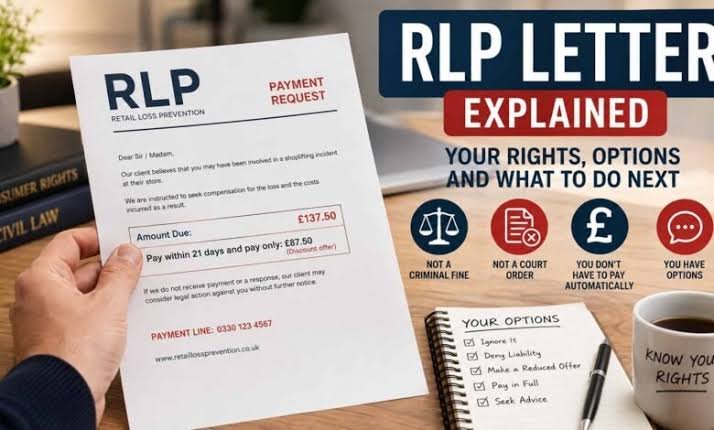
If you have searched for RLP letter, you may be trying to understand what the term means, where it is used, or how to write one correctly. The phrase can be confusing because RLP may have different meanings depending on the organization, school, workplace, legal process, or country where you encountered it.
A letter is usually a formal written document used to communicate information, make a request, provide confirmation, explain a situation, or document an important decision. When the term RLP is added to the phrase, its exact meaning depends on the context.
This guide explains the common ways people may encounter an RLP letter, what information such a letter can contain, how to understand one, and what to check before sending or responding to it.
What Is an RLP Letter?
An RLP letter is a letter associated with a process or organization that uses the abbreviation RLP. The abbreviation itself does not have one universal meaning.
This is important because the same three letters can represent different terms in different fields. For example, RLP can appear in education, business, immigration, professional services, housing, healthcare, legal documentation, and other areas.
Therefore, the best way to understand an RLP letter is to first identify where you saw the term.
If the letter came from a university, employer, government office, company, or another organization, check the heading, sender information, reference number, and surrounding text. These details often explain what RLP means in that particular situation.
Why Do People Search for RLP Letter?
People generally search for the term because they have seen “RLP letter” somewhere and want to know what it means.
Some common questions include:
- What does RLP stand for?
- What is an RLP letter used for?
- Who sends an RLP letter?
- Do I need to respond to it?
- Is an RLP letter formal or legal?
- How should I write an RLP letter?
- What information should be included?
- Can I use an RLP letter template?
- What should I do if I receive one?
The answer depends on the context in which RLP is being used.
RLP Does Not Have One Universal Definition
One of the biggest mistakes people make is assuming that RLP always means the same thing.
Abbreviations are often reused by different organizations. A term that has one meaning in a school or university may have another meaning in a business or government department.
For this reason, you should not rely on a generic definition if the letter is connected to an important matter.
Look for clues such as:
Sender:
Who sent the letter?
Organization:
What company institution or department issued it?
Subject line:
Does the subject explain the purpose?
Reference number:
Is there a case application student employee or account number?
Instructions:
Does the letter ask you to provide documents attend a meeting sign something or respond?
These details can help you understand the specific meaning of RLP in your situation.
What Information Is Usually Found in an RLP Letter?
Although the format can vary, a formal letter commonly contains several important sections.
1. Sender Information
The letter normally identifies the person, organization, department, or institution sending it.
This can include:
- Organization name
- Department name
- Address
- Email address
- Telephone number
- Website
- Contact person’s name
Sender information helps the recipient confirm where the letter came from.
2. Date
A formal letter should normally include the date it was issued.
The date can be important because some letters require a response within a specific period.
For example, a letter may say that the recipient should respond within 7, 14, or 30 days.
3. Recipient Information
The letter may include the recipient’s:
- Full name
- Address
- Organization
- Position
- Student or customer reference number
The exact information depends on the purpose of the letter.
4. Subject
The subject gives the reader a quick idea of what the letter concerns.
A clear subject might look like:
Subject: RLP Letter Regarding Application
or
Subject: Response to RLP Notice
The subject should be short and directly connected to the purpose of the letter.
5. Introduction
The first paragraph should explain why the letter is being sent.
Avoid unnecessary information. The reader should understand the main purpose quickly.
For example:
“Dear [Name],
I am writing regarding the RLP matter referenced in your recent communication.”
The exact wording should be changed according to the situation.
6. Main Details
The body of the letter contains the important information.
Depending on the purpose, this section may explain:
- A request
- A decision
- A response
- Supporting information
- A timeline
- Required documents
- Relevant background
- Next steps
7. Action Required
If the recipient needs to do something, the letter should make that clear.
For example, the letter might ask the recipient to:
- Submit documents
- Complete a form
- Contact an office
- Confirm information
- Attend an appointment
- Respond by a certain date
8. Closing
A formal letter normally ends with a polite closing.
Common choices include:
Kind regards
Sincerely
Yours faithfully
The sender’s name and position can then be included.
How to Write an RLP Letter
If you have been asked to prepare an RLP letter, start by identifying the exact purpose of the document.
Do not begin writing until you understand what the abbreviation means in your specific situation.
Step 1: Understand the Purpose
Ask yourself:
Why am I writing this letter?
Is it a request?
Is it a response?
Is it confirmation?
Is it an explanation?
Is it documentation?
Once the purpose is clear, the rest of the letter becomes easier to organize.
Step 2: Identify the Recipient
Use the correct name and title whenever possible.
If you know the recipient’s name, a personalized greeting is usually better than a generic one.
Step 3: Gather Relevant Information
Before writing, collect all information that needs to be included.
This could include:
- Reference numbers
- Dates
- Names
- Application details
- Account information
- Supporting documents
- Previous correspondence
Make sure important information is accurate.
Step 4: Use Simple Language
A formal letter does not need complicated words.
Simple English is often clearer and more professional.
Instead of writing:
“Pursuant to the aforementioned communication and with regard to the circumstances herein…”
you can write:
“I am writing in response to your previous letter.”
Clear writing makes the document easier to understand.
Step 5: Explain the Main Point
The reader should not have to search through several paragraphs to understand why you wrote the letter.
State the main purpose early.
Step 6: Add Supporting Details
After explaining the main point, provide the information needed to support it.
Keep each paragraph focused on one idea.
Step 7: Mention Deadlines Clearly
If the matter involves a deadline, make sure the date is easy to identify.
For example:
“Please provide the requested documents by 30 September 2026.”
Step 8: Proofread the Letter
Before sending the letter, check:
- Names
- Dates
- Numbers
- Spelling
- Grammar
- Reference numbers
- Attachments
- Contact information
A small mistake in a formal document can create unnecessary confusion.
Simple RLP Letter Template
If you need a basic structure, you can use the following format and adapt it to your specific RLP context.
[Your Name]
[Your Address]
[Email Address]
[Phone Number]
[Date]
[Recipient Name]
[Organization Name]
[Address]
Subject: RLP Letter Regarding [Purpose]
Dear [Recipient Name],
I am writing regarding [briefly explain the reason for the letter].
I would like to provide the following information regarding this matter: [include the relevant details].
Please let me know if you require any additional information or supporting documents.
Thank you for your time and attention.
Kind regards,
[Your Full Name]
Example of an RLP Letter
Here is a general example showing how a formal letter can be structured.
Subject: RLP Matter – Request for Further Information
Dear [Recipient Name],
I am writing regarding the RLP matter mentioned in your recent communication.
I would like to confirm that I have received your letter and understand the information provided. I am currently reviewing the details and gathering the documents required for the next stage of the process.
Please confirm whether any additional documents or information are required from me. I would also appreciate confirmation of the deadline for submitting the requested material.
Thank you for your assistance.
Kind regards,
[Full Name]
This is only a general example. The wording should be changed according to the actual meaning of RLP and the reason for your letter.
What Should You Do If You Receive an RLP Letter?
Receiving a letter containing an unfamiliar abbreviation can be confusing. The first step is not to panic or assume what it means.
Instead, review the document carefully.
Check the Sender
Look at the organization or person that issued the letter.
If you recognize the organization, visit its official website or contact it through an independently verified contact method if clarification is needed.
Read the Entire Letter
Sometimes the meaning of an abbreviation is explained later in the document.
Read the subject line, first paragraph, headings, and instructions.
Look for a Reference Number
A reference number can help the organization locate your case or record when you contact them.
Keep the number available when asking questions.
Check for a Deadline
If the letter asks for a response, identify the exact date.
Do not ignore a deadline simply because you do not understand the abbreviation.
Check Any Attachments
Important instructions may be included in an attachment or separate form.
Make sure you review everything included with the letter.
Is an RLP Letter a Legal Document?
The term RLP letter alone does not automatically mean that a document is legal.
Whether a letter has legal significance depends on its specific purpose, issuer, jurisdiction, and contents.
Some formal letters may simply communicate information. Others may relate to contractual, regulatory, employment, academic, financial, or legal processes.
If the document concerns a legal dispute, court matter, immigration matter, financial obligation, employment rights, or another issue with serious consequences, consider getting advice from an appropriately qualified professional.
Do not assume that an abbreviation by itself determines the legal status of a document.
RLP Letter vs Regular Letter
The main difference is usually the context rather than the basic writing format.
| Feature | RLP Letter | Regular Formal Letter |
|---|---|---|
| Purpose | Depends on the meaning of RLP | General communication |
| Sender | Organization or individual | Individual or organization |
| Subject | Usually specific to the RLP matter | General topic |
| Reference number | May be included | Sometimes included |
| Supporting documents | May be required | Depends on purpose |
| Deadline | May apply | Depends on purpose |
| Formal tone | Usually appropriate | Depends on situation |
The exact requirements of an RLP letter should always come from the organization or process involved.
Common Mistakes When Writing an RLP Letter
Writing a formal letter may seem simple but several mistakes can reduce clarity.
Using the Wrong Meaning of RLP
This is the biggest issue.
Do not assume that RLP has one fixed definition everywhere.
Adding Too Much Unnecessary Information
A long letter is not automatically a better letter.
Include information that helps the reader understand the matter.
Forgetting Important Dates
If dates are important to the matter, check them carefully.
Using Aggressive Language
Even when you disagree with something, professional language is generally more effective.
Explain the issue clearly instead of using emotional language.
Missing Supporting Documents
If the letter says documents are attached, make sure they are actually attached before sending it.
Not Asking for Clarification
If you do not understand an instruction, ask the relevant organization for clarification instead of guessing.
RLP Letter Format for Professional Communication
A professional RLP letter should normally be:
Clear: The reader understands the purpose quickly.
Accurate: Names dates and reference numbers are correct.
Relevant: The letter stays focused on the matter.
Polite: The language remains professional.
Organized: Information appears in a logical order.
Action-focused: Any required next step is easy to identify.
A clean format can make a formal letter easier to read.
RLP Letter and Email Communication
Today, many formal communications are sent by email instead of traditional mail.
The same principles still apply.
An email concerning an RLP matter should have a clear subject line and should identify the relevant case or reference number.
For example:
Subject: RLP Reference [Number] – Request for Confirmation
The email should then explain the purpose, provide relevant details, and clearly state what response or action is needed.
If documents are required, check that the correct files are attached before sending.
How Long Should an RLP Letter Be?
There is no universal required length for an RLP letter.
The ideal length depends on the purpose.
A simple request may require only a few paragraphs. A complicated matter may require additional details and supporting documentation.
The goal should be complete information without unnecessary repetition.
If a single page can clearly explain the matter, there is usually no reason to make the letter much longer.
Can You Use an RLP Letter Template?
Yes, a template can help you organize a formal letter.
However, a template should be treated as a starting point rather than a document that can be copied without changes.
Before using one, confirm:
- What RLP means in your case
- Who should receive the letter
- What information is required
- Whether a specific format is required
- Whether there is a deadline
- Which supporting documents must be included
Some organizations may provide their own official form or letter format. If they do, use their instructions rather than relying on a generic template.
Frequently Asked Questions About RLP Letter
What does RLP stand for in an RLP letter?
There is no single universal expansion of RLP. Its meaning depends on the organization and context where the abbreviation is being used.
What is the purpose of an RLP letter?
The purpose depends on the specific RLP process. It may communicate information, request action, provide confirmation, explain a matter, or document part of a formal process.
How do I know what RLP means?
Check the document for the full term. You can also look at the organization that issued the letter and contact its official office if the meaning is unclear.
Do I need to respond to an RLP letter?
That depends on the instructions in the letter. If it includes a response deadline or asks you to provide information, follow the stated instructions or contact the issuing organization for clarification.
Can I write an RLP letter myself?
If the organization has not provided a required form and you have been asked to submit a letter, you can generally prepare one using a clear formal structure. However, follow any specific instructions you were given.
Should an RLP letter be formal?
If it is being used for an official or professional process, a formal and respectful tone is usually appropriate.
Should I include supporting documents?
Include documents when the instructions request them or when they are necessary to support the information in your letter.
Can an RLP letter be sent by email?
That depends on the requirements of the organization or process. If email submission is accepted, keep the message professional and include the relevant reference information.
Final Thoughts on RLP Letter
The most important thing to remember about an RLP letter is that the abbreviation does not have one universal meaning. Its definition depends on the context in which it appears.
If you are writing or responding to one, first identify the organization, purpose, instructions, and any applicable deadline. Then use a clear structure with the correct recipient information, subject, main details, requested action, and professional closing.
When the meaning of RLP is unclear, checking the original document or contacting the organization that issued it is safer than relying on a general definition found online.
A well-written formal letter does not need complicated language. It simply needs to communicate the correct information clearly, accurately, and professionally.
